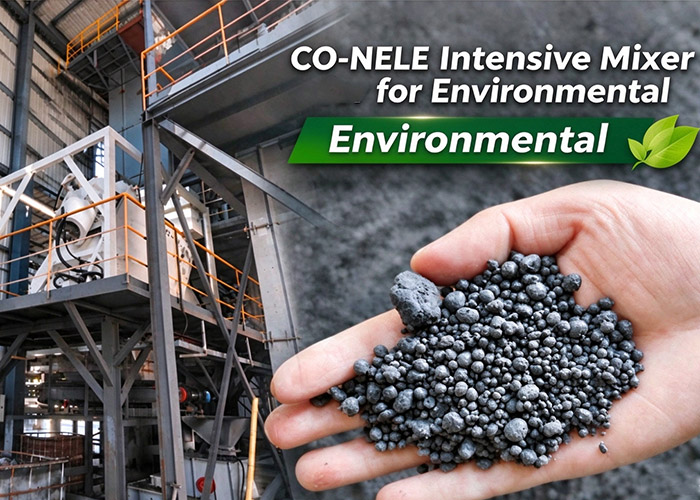
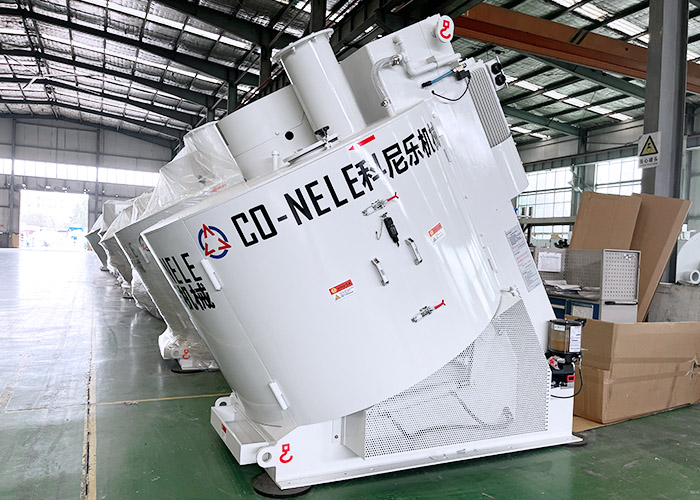
A ceramic mixing granulator combines powder mixing, liquid addition and particle formation in one machine, providing an integrated solution for producing controlled ceramic granules. By adjusting mixing intensity, rotor speed, liquid addition and processing time, manufacturers can regulate granule size and uniformity for different ceramic materials and downstream forming requirements. CO-NELE ceramic granulators are designed for applications involving alumina, silicon carbide, ferrite, refractory materials and other advanced ceramic powders, with adjustable granule sizes from 0.1 to 5 mm.
CO-NELE ceramic mixing granulator
1. What Is a Ceramic Mixing Granulator?A ceramic mixing granulator is an industrial machine used to transform fine ceramic powders into larger, more manageable granules through controlled mixing and agglomeration.Unlike conventional powder mixers that primarily focus on blending raw materials, a ceramic intensive mixer granulator performs two processes in one machine:• Powder mixing: Distributes ceramic powders, binders and other additives throughout the batch.• Wet granulation: Introduces a controlled amount of liquid to promote particle agglomeration and granule growth.This integrated process can reduce the need for separate mixing and granulation equipment, simplify production workflows and improve process control.Ceramic granulation is particularly important when powder flowability, particle size distribution and bulk density affect subsequent pressing, molding or other forming operations.2. How Does an Intensive Mixer Granulator Work?CO-NELE ceramic granulators use an inclined intensive mixing configuration and three-dimensional turbulent mixing motion to achieve powder homogenization and granule formation.The main working process consists of three stages.Stage 1: Powder MixingCeramic raw materials are fed into the mixing chamber. The rotating mixing pan and high-speed eccentric mixing rotor generate intensive material movement, promoting powder circulation, shearing and dispersion.Stage 2: Liquid Addition and GranulationA controlled liquid or binder solution is introduced into the moving powder bed.Fine particles gradually combine into small nuclei. Continued mixing, collision and rolling promote granule growth.Rotor speed, mixing time and liquid addition rate can be adjusted to influence the resulting particle size and granule characteristics.Stage 3: Particle Size Adjustment and DischargeAs granules develop, processing parameters are adjusted to achieve the required particle size distribution.The finished granules are discharged for subsequent drying, screening, storage or forming, depending on the production process.
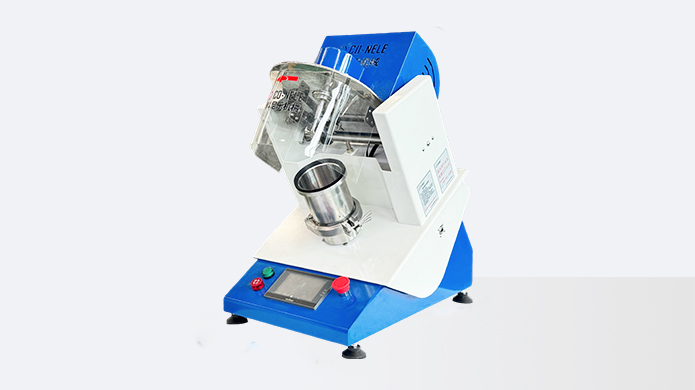
Laboratory ceramic granulator
3. Key Parameters for Ceramic Granule QualityThe performance of a ceramic granulator should not be evaluated by granulation rate alone.For industrial ceramic production, several parameters need to be considered together.| Parameter | CO-NELE technical reference |
| Adjustable particle size | 0.1–5 mm |
| Granulation rate | 90–98% |
| Qualified particle ratio | ≥85% |
| Particle-size tolerance | ≤ ±0.2 mm |
These are published equipment performance references. Actual results depend on the ceramic formulation, moisture content, binder characteristics, operating parameters and the definition of qualified particles.Why Is Particle Size Distribution Important?Particle size directly affects powder flowability, packing behavior and downstream processing.For example:• Fine granules may improve the distribution of certain functional additives.• More uniform granules can support consistent material feeding.• Excessively large or irregular granules may affect mold filling.• Excessive mechanical stress can break fragile granules and increase the fine-powder fraction.Therefore, the objective of ceramic granulation is not simply to produce larger particles. It is to obtain granules with properties suited to the next manufacturing operation.4. Intensive Mixer Granulation vs. Spray DryingBoth intensive mixer granulation and spray drying are established ceramic powder processing technologies, but they follow different production principles.| Comparison | Intensive Mixer Granulation | Spray Drying |
| Starting material | Dry or moist ceramic powders | Ceramic slurry |
| Main mechanism | Mechanical mixing and agglomeration | Atomization and thermal drying |
| Liquid handling | Controlled liquid addition | Slurry preparation and atomization |
| Main process output | Granules formed through mechanical agglomeration | Dried granules formed from slurry droplets |
| Process configuration | Mixing and granulation in one machine | Slurry preparation, atomization and drying |
| Typical consideration | Granule growth and mechanical treatment | Drying energy and slurry properties |
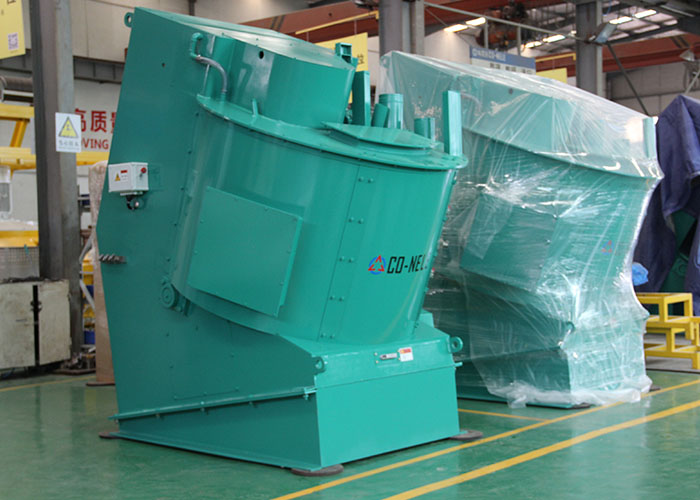
Which process should ceramic manufacturers choose?Intensive mixer granulation is worth evaluating when manufacturers need integrated powder mixing and granulation, flexible process adjustment or a more compact processing configuration.Spray drying remains particularly relevant when the production process requires slurry-based preparation and specific free-flowing press granules.Neither technology is universally superior. The appropriate choice depends on raw material characteristics, target granule properties, production capacity and downstream forming requirements.5. Ceramic Materials and Industrial ApplicationsCO-NELE ceramic mixing granulators can be configured for different ceramic powder processing requirements.Alumina Powder GranulationAlumina granulation is used in advanced ceramics, wear-resistant components and ceramic grinding media production. Uniform powder preparation and controlled granule formation are important for subsequent forming and sintering.Silicon Carbide GranulationSilicon carbide powders are used in wear-resistant ceramics, structural ceramics and high-temperature applications. Granulation requirements depend on powder characteristics and the intended forming process.Ferrite Powder GranulationFerrite materials are widely used in electronic components and magnetic applications. Consistent mixing and granule formation help prepare powders for subsequent pressing and thermal processing.Refractory Ceramic GranulationRefractory materials require controlled powder preparation to support consistent material feeding, forming and product quality.Other Ceramic MaterialsAdditional applications include zirconia, electronic ceramics, ceramic additives, molecular sieve materials and other specialized powder formulations.6. Laboratory and Industrial Ceramic GranulatorsSelecting the right ceramic granulator requires consideration of both laboratory testing and production requirements.CO-NELE provides granulation equipment covering laboratory development and industrial production.Laboratory granulators are suitable for:• Ceramic formulation development.• Binder and moisture optimization.• Small-batch granulation experiments.• Particle size and granulation performance evaluation.Industrial ceramic granulators are designed for continuous production requirements in terms of batch volume, processing efficiency, equipment configuration and production-line integration.Before selecting a machine, manufacturers should evaluate:1. Ceramic powder composition and initial particle size.2. Required granule size and distribution.3. Target production capacity.4. Binder type and liquid addition requirements.5. Downstream pressing, molding or sintering process.6. Wear resistance and product contamination requirements.
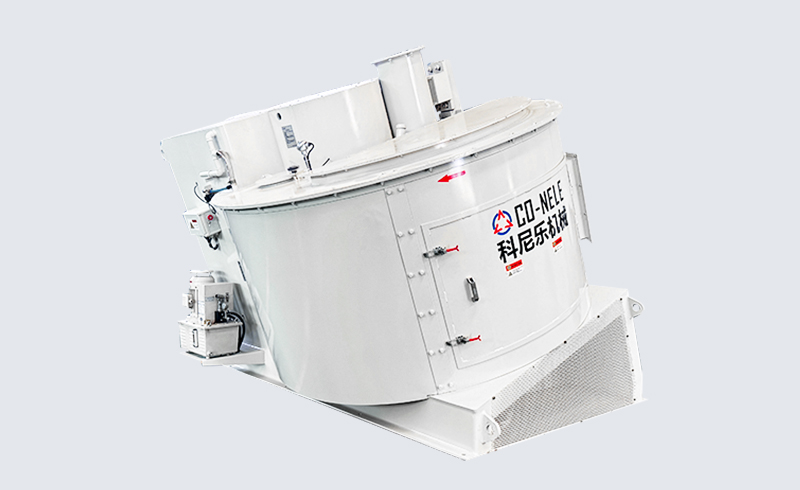
Industrial ceramic granulator
7. Why Test Ceramic Powders Before Selecting a Granulator?One of the most important steps in ceramic granulator selection is testing the actual raw materials.Different ceramic powders can behave very differently under identical operating conditions.Powder density, particle size, surface characteristics, moisture sensitivity and binder compatibility all influence granulation performance.CO-NELE provides material testing and equipment selection support to help customers evaluate:• Granulation performance.• Particle size distribution.• Granule uniformity.• Liquid addition requirements.• Processing time and production efficiency.Testing with the customer's original material helps establish suitable operating parameters before industrial equipment selection.Frequently Asked Questions About Ceramic Mixing GranulatorsQ1: What particle sizes can a ceramic granulator produce?CO-NELE ceramic granulators offer adjustable particle sizes from 0.1 to 5 mm. The achievable size depends on the raw material, binder addition and operating conditions.Q2: Can a ceramic mixing granulator combine mixing and granulation?Yes. An intensive mixer granulator can homogenize ceramic powders, incorporate liquid binders and promote particle agglomeration in one machine.Q3: Which ceramic materials can be processed?Applications include alumina, silicon carbide, zirconia, ferrite, refractory powders, electronic ceramics and other specialized ceramic materials. Suitability should be confirmed through material testing.Q4: Is intensive mixer granulation better than spray drying?The two technologies serve different process requirements. Intensive mixer granulation integrates mechanical mixing and agglomeration, while spray drying converts ceramic slurry into dried granules. Selection depends on the raw material and downstream forming process.Q5: How do I select the right ceramic granulator?Provide the ceramic material type, initial powder characteristics, target granule size, required production capacity and downstream application. CO-NELE can evaluate the material and recommend a suitable equipment configuration.Choose CO-NELE Ceramic Mixing Granulation SolutionsCO-NELE develops intensive mixing and granulation equipment for laboratory testing and industrial powder processing.With adjustable mixing parameters, integrated mixing and granulation capabilities, and material testing support, CO-NELE helps ceramic manufacturers develop granulation processes suited to their specific production requirements.Contact CO-NELE to discuss your ceramic powder granulation requirements and arrange a material test.